

Probably every employer has asked themselves this question at some point. How do I improve my hiring results?
With new hire failure rates hovering around 50%, this puts the odds of hiring a great employee at the same probability as a coin flip. With costs of advertising, onboarding, training and equipping employees continually rising as well as the potential liabilities associated with making a wrong hire, it only makes sense to want to improve those odds.
The obvious actions of looking over resumes for qualifications and background are not necessarily the full answer anymore. Thanks to AI being used at both ends of the resume building/qualifying process, it really serves to only reduce human interaction as well as upping the likelihood of hiring the wrong person or missing out on the right one.
So where is the weak link that if improved, would increase one’s likelihood of getting the correct fit? The honest answer is with the person doing the hiring themselves.
Somewhere along the line in the hiring process, there is a point where a decision is made. That decision is usually made by a person or several people making a judgment based on their experience or feelings. If the interview goes smoothly and the candidate impresses, they have a better shot of getting the position than someone who may be awkward or nervous. People interviewing, also tend to look for people who act or look like them. These are natural impulses, but they can get in the way of making good hiring decisions. The other factor is the perceived pressure the decision maker is under to fill the position. If filling the position is considered urgent, considerations that were previously unmovable tend to loosen.
The answer is objective assessment. Skills tests have been standard for years, particularly in physical or technical positions. But what about soft skills? It is just being realized how influential a person’s personality or tendencies can not only have on their success, but that of the entire enterprise. This was the whole reason behind the DISC assessment. It illustrates the importance of creating interactions that fit in with how particular character types handle different situations. Many companies use the DISC profile to align team members to improve their mutual productivity. However, even DISC has its drawbacks.
The DISC assessment places individuals in four buckets. Each bucket lists various ways the people in that bucket react in different situations. The issue comes from people not usually being the same at all times. This creates a situation where a person can mainly have one type personality but another as well. This makes the assessment less accurate.
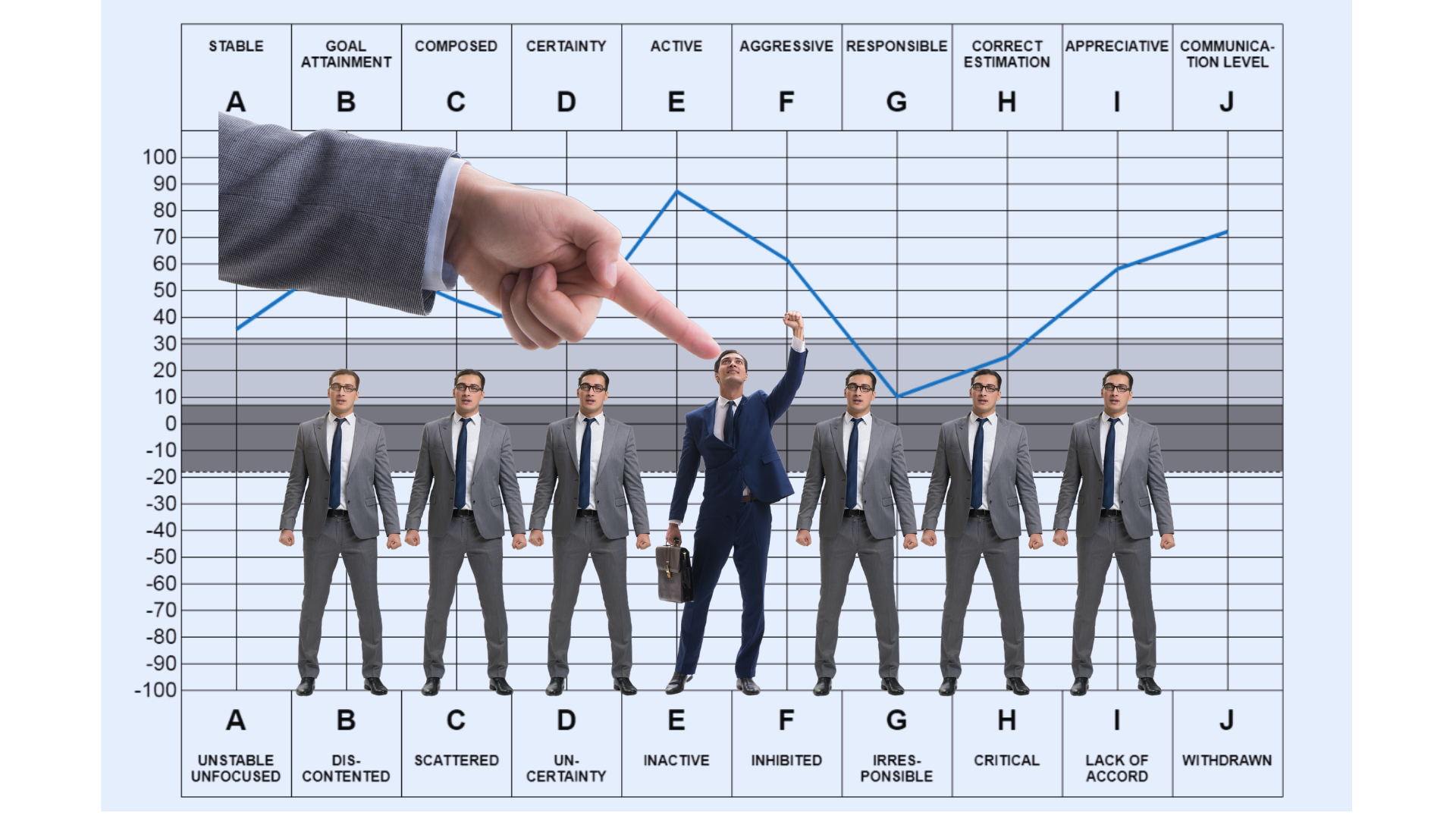
A more modern approach is the Personnel Potential Analysis™, which is a trademarked online version of the Oxford Capacity Analysis. What makes this analysis so effective is that it does not lump people into categories but paints a picture of that particular individual. It measures that person’s tendencies on a scale of +/- 100 along ten specific character traits directly related to working in a job environment. The closer the person’s score approaches 100 in either direction, the more they tend to exhibit the positive or negative tendencies of that characteristic. Each characteristic is based on a dichotomy like STABLE vs UNSTABLE, COMPOSED vs SCATTERED, RESPONSIBLE vs IRRESPONSIBLE etc. with the assessment yielding a graph along the ten categories. In this way it paints a portrait of that person opposed to a general group. The character traits measured are STABILITY, GOAL ATTAINMENT, COMPOSED, CERTAINTY, ACTIVE, AGRESSIVE, RESPONSIBLE, CORRECT ESTIMATION, APPRECIATIVE and COMMUNICATION LEVEL
A manager or business owner has a much better idea as to how that individual is likely to handle the environment and relationships they would encounter in a position. This takes a lot of the guessing out of hiring. It also allows for faster sorting of candidates making it possible to spend time and resources only on candidates most likely to be successful in the role. I’ve used the original Oxford Capacity Analysis for years and the new online version is a GAME CHANGER. If anyone has a hiring task ahead of them, reach out for a free, no obligation walk through.
Dave Skipton
Professional Business Advisor
Successful Business Dynamics
I help build winning teams
(206) 387-0764
https://calendly.com/sbdyn/free-initial-one-to-one-consultation